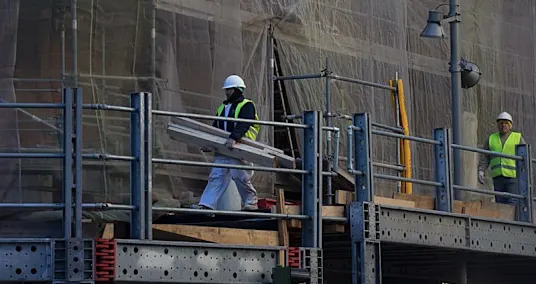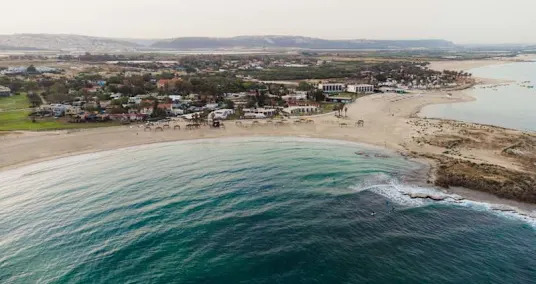
The discovery was made in an ancient shipwreck in the Dor Lagoon near the Carmel Coast, where archaeologists recovered nine pieces of unprocessed iron known as “blooms.”
Researchers from the University of Haifa said Wednesday that an underwater excavation off Israel’s northern Mediterranean coast uncovered what they described as the earliest known cargo of raw iron transported by ship, dating back around 2,600 years, Xinhua reported.
The discovery was made in an ancient shipwreck in the Dor Lagoon near the Carmel Coast, where archaeologists recovered nine pieces of unprocessed iron known as “blooms.” According to the university, the find provides direct evidence of how iron was transported in its earliest commercial stages.
The material was preserved in its original form, having solidified directly in a smelting furnace without undergoing forging or further refinement. Researchers said this distinguishes the cargo from later iron artifacts that typically show signs of shaping or tool-making.
Unlike copper and bronze, which could be melted into liquid form in ancient production processes, iron was heated with charcoal to produce a solid, porous mass. That mass was generally hammered to remove impurities and create denser material suitable for tools and implements.
The recovered blooms showed no indication of that secondary processing stage, suggesting they were transported immediately after production.

Earliest iron shipment discovered in ancient Mediterranean wreck
To determine the age and condition of the cargo, researchers conducted microscopic and chemical analyses.
Radiocarbon dating was also carried out on charred wood embedded in one of the pieces, helping confirm the timeline of the shipment. The findings were published in the journal Heritage Science.
Researchers said the cargo indicates that iron was being moved in raw form from production sites to other locations for further processing, pointing to a level of specialization in ancient manufacturing and trade networks in the Mediterranean.
The University of Haifa said the discovery provides new insight into early iron production and distribution practices in the region.
latest_posts
- 1
 Would you ever turn to AI for companionship? 6% of Americans say they could — or already have.
- 2Space Condos to Lift Your Metropolitan Living
- 3Iran executes two men who tried storming military facility during January protest crackdown
- 4An Extended time of Careful Nurturing: Individual Bits of knowledge on Bringing up Youngsters
- 5'You're no longer my sister' - rows erupt as war divides Iranian families





- Steinmeier honours Italian 'guest workers' who rebuilt German economy
- 2024 Ferrari Roma With Just One Owner & 3,300 Miles For Sale At $...
- Astonishing interstellar comet captured in new images by NASA Mars missions
- More charges filed against ex-left-wing RAF member Daniela Klette
- Find the Abilities Required for Advanced Advertising Position
- Volkswagen Just Built a Plug-In Tiguan for China That America Doesn’t Get
- Flu activity rises sharply across US with 7.5 million cases, CDC data shows
- Man threatens attack on German high-speed train, injures several
- Spain breaks jobs record with 22 million Social Security contributors